
Public Psychology of Thai Citizens in the Transitional Period
Article Sidebar
Main Article Content
Abstract
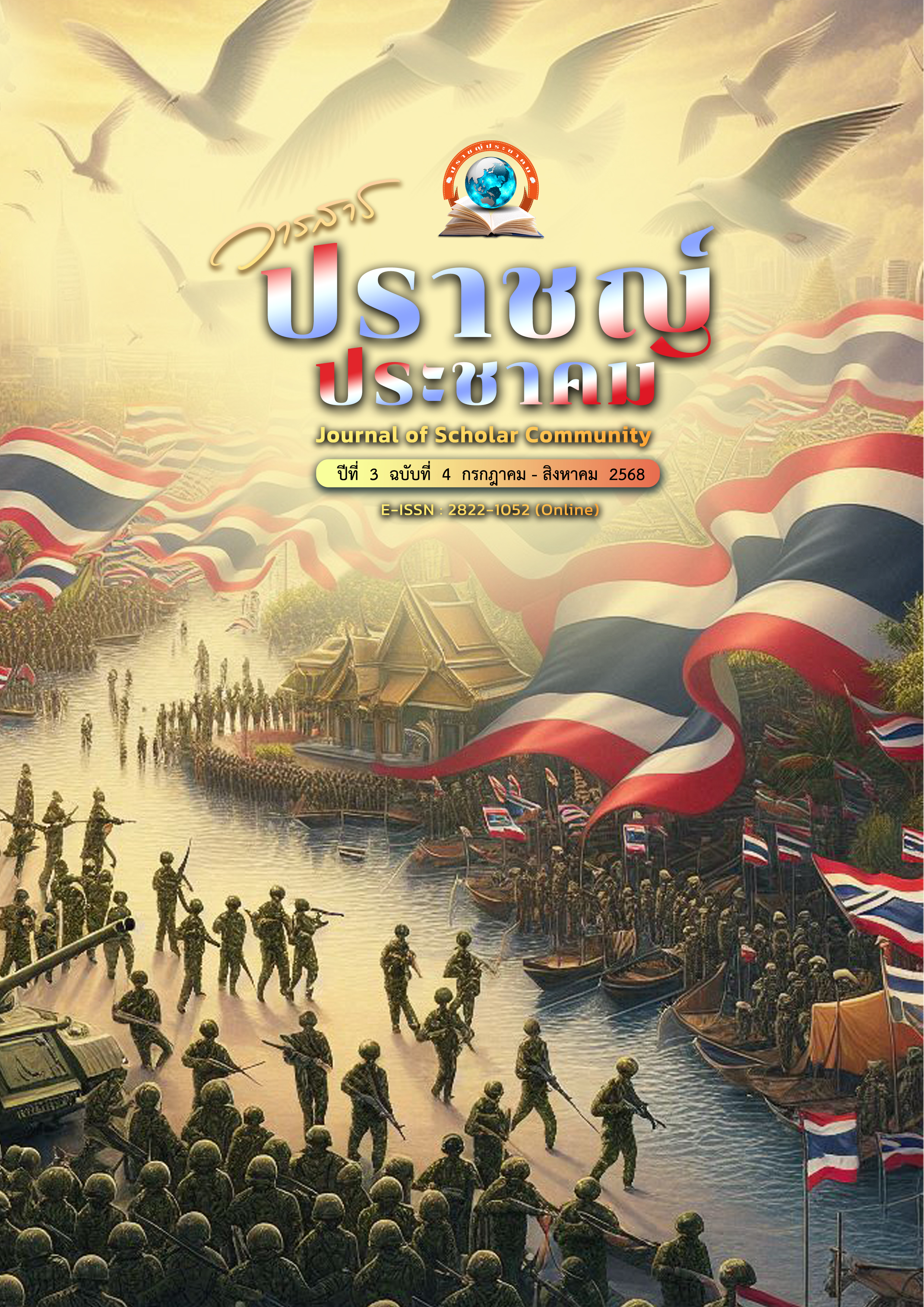
The article titled " The Public Psychology of Thai Citizens in the Transitional Period” In today's era of rapid modernization in the world, the global society, including Thai society, has also been influenced by the wave of globalization, which has led to extensive changes in economy, society, culture and politics. All these have caused a number of other social phenomena, each of which has affected the changes of people's lifestyles, attitudes and behavior, whether in terms of economics and society, Thailand has changed the process of industrial capitalism, leading to the expansion of cities and industrial areas, the movement of labor from rural areas to cities, creating groups of workers. In the industrial sector, modern technology is introduced to help in the production of goods, leading to changes in lifestyles and culture. In terms of society and culture, there is modern communication and transportation, resulting in the transfer of culture, influenced by cultures from around the world, such as dressing, values, consuming products and services according to trends, resulting in a fusion between traditional cultures such as and foreign cultures, which is what is called a mixed culture. And the political side of Thai society faces the challenge of a society with a democratic form of government, calling for decentralization of power, political participation, freedom, human rights, and equality. From the history of Thai politics and government over the past 90 years, there are still various problems that affect the government that uses arbitrary power in the form of a "dictatorial government from elections", without considering the legitimacy that has been assigned by the people to come and govern the country as a whole, causing division into factions and conflicting interests. However, to establish a strong and sustainable public awareness, we need the cooperation of various departments; The government formulates policies and regulations; Civil society establishes the flow of public consciousness; The education department cultivates values through the education system, and at the same time uses the media to carry out publicity to stimulate public awareness and make it appear constantly.
Article Details

This work is licensed under a Creative Commons Attribution-NonCommercial-NoDerivatives 4.0 International License.
References
กำพล ศรีโท. (2567). วิเคราะห์แนวคิดทางปรัชญาการเมืองของอริสโตเติล. วารสาร มจร สังคมศาสตร์ปริทรรศน์, 13(3), 343-353.
เกรียงศักดิ์ เจริญวงศ์ศักดิ์. (2556). แนวทางการสร้างจิตสาธารณะในสังคมไทย. รัฐสภาสาร, 61,(1), 77-87.
ชัยวัฒน์ สุทธิรัตน์. (2555). สอนเด็กให้มีจิตสาธารณะ. วีพริ้นส์.
ณฐวัฒน์ ล่องทอง. (2565). การปรับตัวให้เข้ากับการเปลี่ยนแปลงในยุคศตวรรษที่ 21. คณะมนุษยศาสตร์ มหาวิทยาลัยเชียงใหม่.
เดลินิวส์. (2567). 90 ปี ประชาธิปไตยไทยในวงจรอุบาท. https://www.dailynews.co.th/articles/1175435/
ทิพย์พาพร ตันติสุนทร. (2554). การศึกษาเพื่อสร้างความเป็นพลเมือง. สถาบันนโยบายการศึกษา.
พระไพศาล วิสาโล. (2554). ประชาสังคม และวัฒนธรรมชุมชน. มูลนิธิเด็ก.
สำนักงานคณะกรรมการพัฒนาการเศรษฐกิจและสังคมแห่งชาติ. ยุทธศาสตร์ชาติ พ.ศ. 2561–2580 (ฉบับย่อ). (2567). https://www.nesdc.go.th/.
สุวิทย์ เมษินทรีย์. (2563). โลกเปลี่ยน คนปรับ: เตรียมคนไทยเป็นมนุษย์ที่สมบูรณ์ ในโลกหลังโควิด-19. กระทรวงการอุดมศึกษา วิทยาศาสตร์ วิจัยและนวัตกรรม.
Marshall, T. H. (1950). Citizenship and Social Class. Cambridge at The University Press.
