
การใช้ R สำหรับการวิเคราะห์อภิมานในบริบทการวิจัยธุรกิจ
คำสำคัญ:
Meta-analysis, PICO, PRISMA, R, meta Package, dmetar Packageบทคัดย่อ
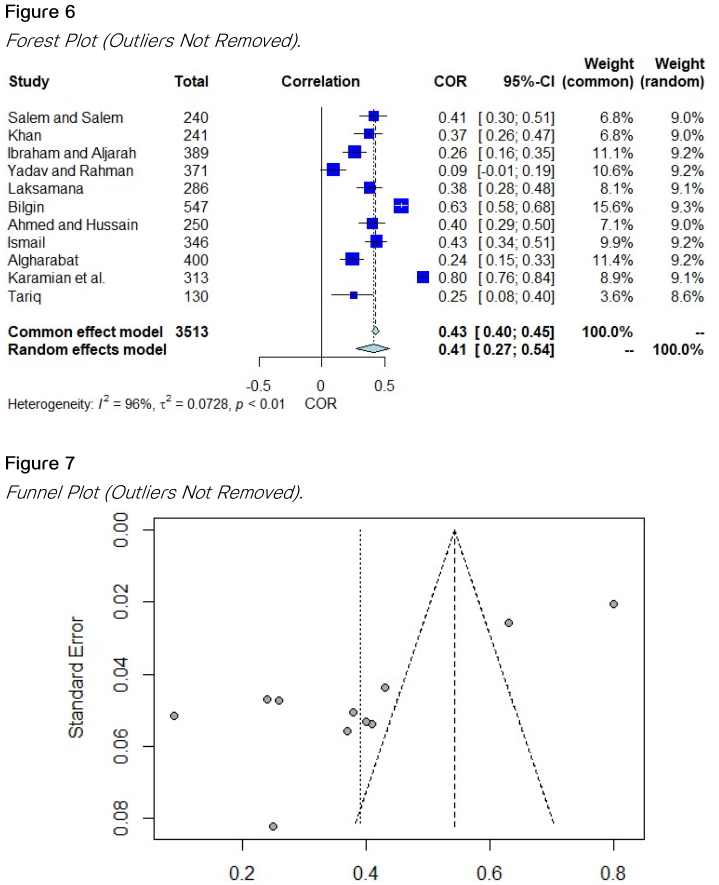
R ถูกใช้อย่างแพร่หลายในการวิเคราะห์อภิมานสำหรับการเผยแพร่ในระดับนานาชาติ อย่างไรก็ตามนักวิชาการและนักวิจัยไทยใช้ R ในการวิเคราะห์อภิมานค่อนข้างน้อย ซึ่งอาจมีช่องว่างในทางปฏิบัติ บทความนี้จึงมีจุดมุ่งหมายเพื่อลดช่องว่างนี้โดยการส่งเสริมให้นักวิชาการและนักวิจัยชาวไทยใช้ R สำหรับการวิเคราะห์อภิมานในบริบทของการวิจัยทางธุรกิจ บทความนี้จะสาธิตว่า R สามารถทำการวิเคราะห์อภิมานได้อย่างมีประสิทธิภาพไม่แพ้โปรแกรมอื่น ๆ บทความแบ่งออกเป็น 2 ส่วนหลัก คือ การทบทวนอย่างเป็นระบบและการวิเคราะห์อภิมาน แนวคิดเบื้องต้นเกี่ยวกับการทบทวนอย่างเป็นระบบจะนำเสนอในส่วนแรกของบทความ ซึ่งประกอบด้วยส่วนย่อย 2 ส่วน คือการประยุกต์ใช้ SRQ (แทน PICO) เป็นกรอบการอธิบายคำถามวิจัยอย่างชัดเจน ซึ่งเป็นพื้นฐานสำหรับการรวบรวมวรรณกรรมเพิ่มเติมในการวิเคราะห์อภิมานที่มีอยู่ ส่วนย่อยที่ 2 คือ การกำหนดเกณฑ์การคัดเลือกงานวิจัยที่จะรวมไว้ในการวิเคราะห์อภิมานโดยประยุกต์ใช้ PRISMA ส่วนที่เหลือของบทความเน้นการดำเนินการวิเคราะห์อภิมานใน R รวมถึงหัวข้อที่เกี่ยวข้อง เริ่มต้นด้วยการนำเข้าชุดข้อมูลสำหรับการวิเคราะห์จากไฟล์ Excel ตัวอย่างของสคริปต์ R สำหรับการวิเคราะห์อภิมาน ผลการวิเคราะห์ทางสถิติที่จำเป็นทั้งหมด เช่น ขนาดอิทธิพลรวมในรูปแบบของสมมุติฐานทั่วไป (อิทธิพลคงที่) และขนาดอิทธิพลสุ่มสำหรับการประเมินความหลากหลายของงานวิจัยที่นำมาวิเคราะห์อภิมาน นอกจากนี้ R ยังสามารถสร้างแผนภาพป่าและแผนภาพกรวยได้อีกด้วย บทความนี้ยังอภิปรายถึงวิธีการใช้แผนภาพกรวยเพื่อความลำเอียงจากการตีพิมพ์ R สามารถทำการวิเคราะห์อภิมานได้อย่างครอบคลุมสมบูรณ์เทียบเท่าหรืออาจจะมากกว่าโปรแกรมอื่น ๆ ที่มีอยู่ นักวิจัยและนักวิชาการไทยสามารถใช้ R ได้อย่างมั่นใจ และควรใช้ R สำหรับการทำการวิเคราะห์อภิมานและเผยแพร่ตีพิมพ์ผลงานเหมือนนักวิจัยนานาชาติในวารสารที่มีชื่อเสียงต่อไป
เอกสารอ้างอิง
Balduzzi, S., Rücker, G., & Schwarzer, G. (2019). How to perform a meta-analysis with R: A practical tutorial. Evidence-based Mental Health, 22(4), 153–160. https://doi.org/10.1136/ebmental-2019-300117
Cajal, B., Jiménez, R. M. M., Gervilla, E., & Montaño, J. C. M. (2020). Doing a systematic review in health sciences. Clínica Y Salud, 31(2), 77–83. https://doi.org/10.5093/clysa2020a15
Chananet, C. (2010). Using R program for meta-analysis. The Journal of Applied Science, 9(1), 28-38. https://www.journal.sci.kmutnb.ac.th/journal_files/3_1_2553.pdf
Dechpichai, P., Kongchareon, J., Suwanateep, N., Tuprakay, S.R., Pongsopa, J. (2017). Kham Chuk Nai Lok Phoom Phae Nai Dek Thai: Kan Vi Klo Apiman [The pooled prevalence of allergic disease]. Advances Science, 17(2), 78-98. https://sci.bsru.ac.th/sciweb/e-magazine/17-2/chapter-7.pdf (In Thai)
Dettori, J. R., Norvell, D. C., & Chapman, J. R. (2021). Seeing the forest by looking at the trees: how to interpret a meta-analysis forest plot. Global Spine Journal, 11(4), 614–616. https://doi.org/10.1177/21925682211003889
Dettori, J. R., Norvell, D. C., & Chapman, J. R. (2022). Fixed-effect vs random-effects models for meta-analysis: 3 points to consider. Global Spine Journal, 12(7), 1624–1626. https://doi.org/10.1177/21925682221110527
Feeley, T. H. (2020). Assessing study quality in meta-analysis. Human Communication Research, 46(2–3), 334–342. https://doi.org/10.1093/hcr/hqaa001
Gogtay, N. J. & Thatte, U. M. (2017). An introduction to meta-analysis. Journal of the Association of Physicians in India, 65, 78-85. https://www.kem.edu/wp-content/uploads/2012/06/14-An-introduction_to_meta_analysis-1.pdf
Harrer, M., Cuijpers, P., Furukawa, T. A., & Ebert, D. D. (2021). Doing meta-analysis with R: A hands-on guide. Chapman & Hall/CRC Press.
Ibrahim, B. (2021). Social media marketing activities and brand loyalty: A meta-analysis examination. Journal of Promotion Management, 28(1), 60–90.
https://doi.org/10.1080/10496491.2021.1955080
Linden, A., & Hönekopp, J. (2021). Heterogeneity of research results: A new perspective from which to assess and promote progress in psychological science. Perspectives on Psychological Science, 16(2), 358–376. https://doi.org/10.1177/1745691620964193
O’Rourke, K. (2007). A historical perspective on meta-analysis: Dealing quantitatively with varying study results. Journal of the Royal Society of Medicine, 100(12), 579–582.
https://doi.org/10.1177/0141076807100012020
Page, M. J., McKenzie, J. E., Bossuyt, P. M., Boutron, I., Hoffmann, T. C., Mulrow, C. D., Shamseer, L., Tetzlaff, J. M., Akl, E. A., Brennan, S. E., Chou, R., Glanville, J., Grimshaw, J. M., Hróbjartsson, A., Lalu, M. M., Li, T., Loder, E. W., Mayo-Wilson, E., McDonald, S., & McGuinness, L. A. (2021). The PRISMA 2020 statement: An updated guideline for reporting systematic reviews. British Medical Journal, 372(71). https://www.bmj.com/content/372/bmj.n71
Paul, J., & Barari, M. (2022). Meta‐analysis and traditional systematic literature reviews—What, why, when, where, and how? Psychology & Marketing, 39(6), 1099–1115.
https://doi.org/10.1002/mar.21657
R Core Team (2021). R: A language and environment for statistical computing. R Foundation for Statistical Computing. https://www.R-project.org/.
S, Moher, D. (2021). The PRISMA 2020 statement: An updated guideline for reporting systematic reviews. PLOS Medicine, 18(3), Article e1003583.
https://doi.org/10.1371/journal.pmed.1003583
Simmonds, M. (2015). Quantifying the risk of error when interpreting funnel plots. Systematic Reviews, 4(1). https://doi.org/10.1186/s13643-015-0004-8
Spineli, L. M., & Pandis, N. (2020). Fixed-effect versus random-effects model in meta-regression analysis. American Journal of Orthodontics and Dentofacial Orthopedics, 158(5), 770–772. https://doi.org/10.1016/j.ajodo.2020.07.016
Tatsioni, A., & Ioannidis, J. P. A. (2017). Meta-analysis. International Encyclopedia of Public Health, 117–124. https://doi.org/10.1016/b978-0-12-803678-5.00291-5
Wickham, H. &, Bryan, J. (2023). readxl: Read Excel files. [R package]. https://readxl.tidyverse.org
ดาวน์โหลด
เผยแพร่แล้ว
รูปแบบการอ้างอิง
ฉบับ
ประเภทบทความ
สัญญาอนุญาต
ลิขสิทธิ์ (c) 2024 ผู้แต่ง

อนุญาตภายใต้เงื่อนไข Creative Commons Attribution-NonCommercial-NoDerivatives 4.0 International License.
บทความที่ตีพิมพ์ในวารสารนี้อยู่ภายใต้สัญญาอนุญาต Creative Commons Attribution-NonCommercial-NoDerivatives 4.0 International (CC BY-NC-ND 4.0)

