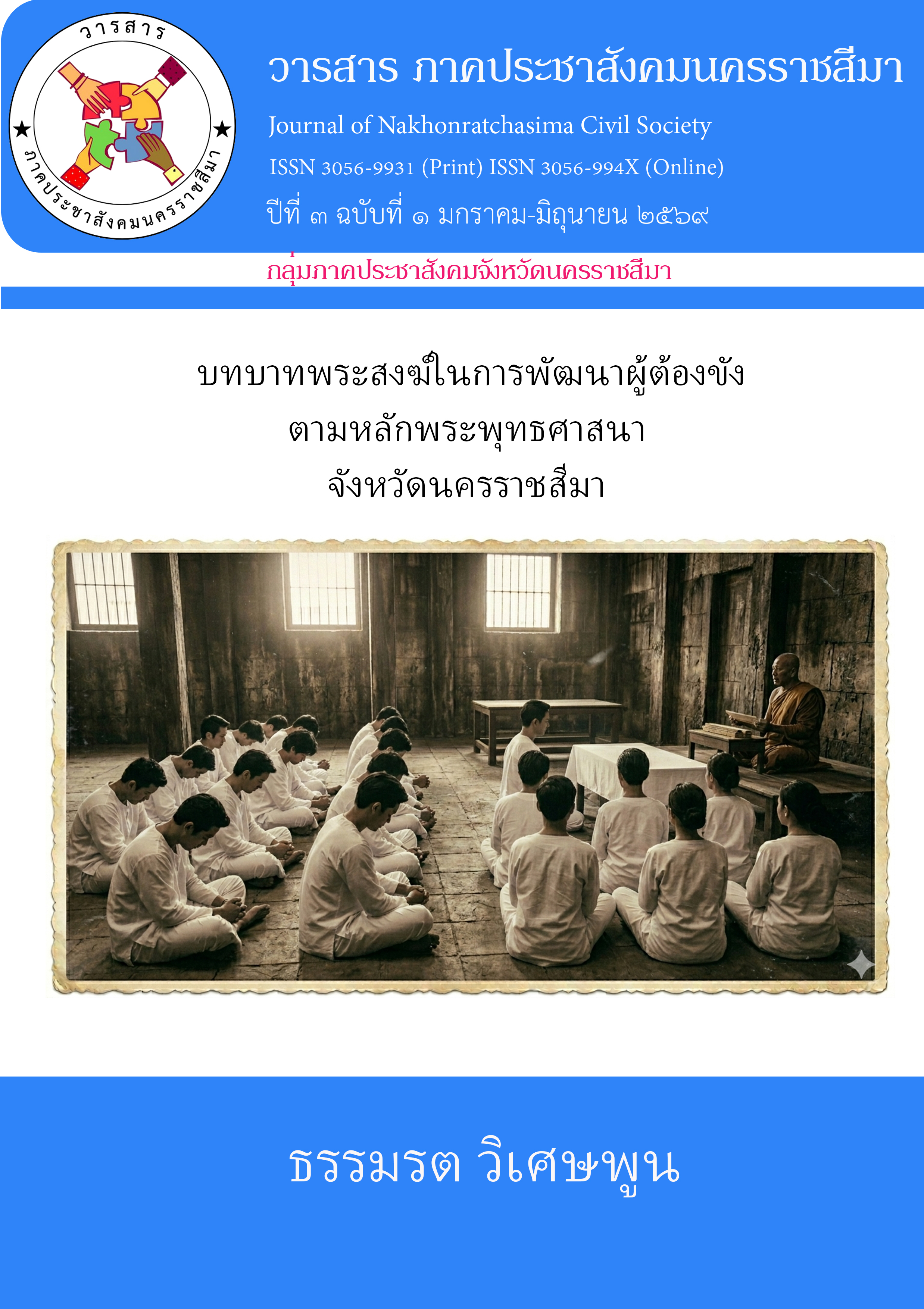
THE ROLE OF BUDDHIST MONKS IN THE DEVELOPMENT OF PRISONERS ACCORDING TO BUDDHIST PRINCIPLES, NAKHON RATCHASIMA PROVINCE
Keywords:
The role of Buddhist monks, prisoner development, BuddhismAbstract
This research aimed to 1. study the role of Buddhist monks in the development of inmates in Nakhon Ratchasima Province; 2. compare the role of Buddhist monks in the development of inmates in Nakhon Ratchasima Province, categorized by personal factors; and 3. study the problems, obstacles, and suggestions regarding the role of Buddhist monks in the development of inmates in Nakhon Ratchasima Province. The research employed a mixed-methods approach. Quantitative research used questionnaires as a data collection tool. The sample consisted of 100 Nakhon Ratchasima Central Prison officers. Statistical analyses included frequency, percentage, mean, and standard deviation. Hypothesis testing was conducted using t-tests, F-tests, and one-way ANOVA. Qualitative research involved in-depth interviews with 9 key informants (monks or individuals). Data was analyzed using descriptive content analysis.
The research findings indicated that 1) the overall role of Buddhist monks in the development of inmates in Nakhon Ratchasima Province was at a moderate level. The study found that the highest average score was for mental health (3.24), followed by economic and social aspects (3.13), and the lowest average score was for physical health (3.12). 2) A comparison of the role of monks in developing inmates in Nakhon Ratchasima Province showed no significant difference in the opinions of prison staff across different genders, ages, education levels, and monthly incomes. Therefore, the research hypothesis was rejected. Recommendations include: arranging for knowledgeable monks to give lectures alongside prison staff to improve inmates' attitudes towards behavioral change and quality of life; coordinating with government agencies to organize activities and projects to reduce prison sentences; and promoting a new life for inmates, preventing reoffending, in accordance with integrated Buddhist principles.
References
จิตติมา เสนาไชย. (2554). บทบาทวัดในการส่งเสริมสุขภาพชุมชน : กรณีศึกษาวัดพระธาตุดอยสะเก็ด จังหวัดเชียงใหม่. วิทยานิพนธ์พุทธศาสตรมหาบัณฑิต (พระพุทธศาสนา). บัณฑิตวิทยาลัย : มหาวิทยาลัยมหาจุฬาลงกรณราชวิทยาลัย.
ประยงค์ สุวรรณบุบผา. รัฐปรัชญา แนวคิดตะวันออก - ตะวันตก. กรุงเทพฯ : โอเดียนสโตร์, 2541.
พระครูสุทธิวรญาณ (ภักดี เขมธโร). (2564). การเผยแผ่พระพุทธศาสนาของพระสงฆ์แก่ผู้ต้องขังในเรือนจำจังหวัดสระแก้ว. วารสารพุทธนวัตกรรมและการจัดการ. 1(1), 20-30.
พระครูสุวรรณวรการ. (2553). ศึกษาบทบาทของพระสงฆ์ในการพัฒนาชุมชนในจังหวัดปทุมธานี. วิทยานิพนธ์พุทธศาสตรมหาบัณฑิต สาขาวิชาการจัดการเชิงพุทธ. บัณฑิตวิทยาลัย : มหาวิทยาลัย มหาจุฬาลงกรณราชวิทยาลัย.
พระครูพิศิษฏ์ประชานาถ (นนทิโย ประยูร). (2560). บทบาทการพัฒนาชุมชนของวัดอินทาราม อำเภออัมพวา จังหวัดสมุทรสงคราม. วารสาร มจร สังคมศาสตร์ปริทรรศน์. 6(2), 439-455.
พระมหานิพิฐพนธ์ กิตฺติพนฺโธ (กันตธรารักษ์), พระเจริญพงษ์ ธมฺมทีโป (วิชัย) และพระมหาศุภวัฒน์ ฐานวุฑฺโฒ (บุญทอง). (2560). การพัฒนารูปแบบพุทธวิธีการป้องกันการกระทำผิดซ้ำของผู้ต้องขังเรือนจำจังหวัดสมุทรสาคร. วารสารสังคมศาสตร์และวัฒนธรรม. 9(7), 272-284.
พระมหาสนอง อคฺคธมฺโม (ยาจิตร). (2550). บทบาทพระสงฆ์ในการส่งเสริมชาวบ้านให้พึ่งตนเอง : ศึกษากรณี พระครูพิพิธธรรมรส. วิทยานิพนธ์พุทธศาสตรมหาบัณฑิต สาขาวิชาพระพุทธศาสนา. บัณฑิตวิทยาลัย : มหาวิทยาลัยมหาจุฬาลงกรณราชวิทยาลัย.
พระเทพเวที (ประยุทธ์ ปยุตฺโต). (2531). พระพุทธศาสนาในเอเชีย. กรุงเทพฯ : มหาจุฬาลงกรณราชวิทยาลัย.
สวัสดิ์ จิรัฏฐิติกาล. (2554). การปฏิบัติธรรมของผู้ต้องขังในเรือนจำกลางคลองเปรม. รายงานการวิจัย.พระนครศรีอยุธยา : มหาวิทยาลัยมหาจุฬาลงกรณราชวิทยาลัย.
UNESCO. (1978). Indicators of Environmental Quality and Qualityof Life. Paris: UNESCO