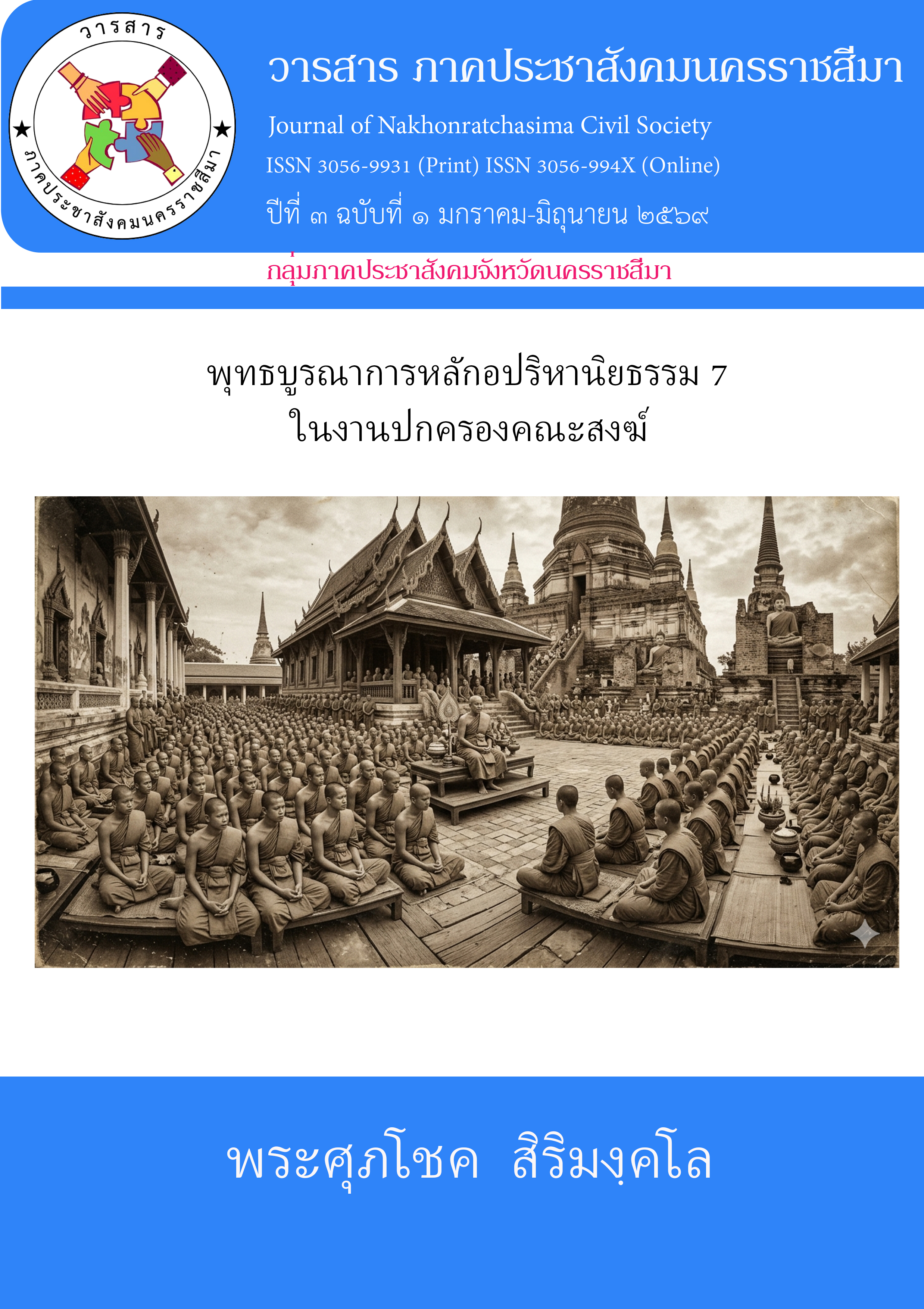
THE SEVEN FUNDAMENTAL BUDDHIST PRINCIPLES OF NON-DECLINE IN THE GOVERNANCE OF THE SANGHA.
Keywords:
Buddhist Integration, The Seven Principles of Non-Decline, The administration of the monastic communityAbstract
Integrated Buddhist monastic governance, based on the Seven Principles of Non-Decline (Aparihaniyadhamma), is not merely about maintaining tradition and rules, but about creating an organizational culture born from unity, compassion, and mutual respect, aiming for the enduring stability of the monastic community. This integrated Buddhist governance process involves encouraging monks to meet regularly, perform monastic duties in unified manner, maintain a continuous administrative system, and adhere to the Dhamma and Vinaya without enacting anything not prescribed by the Buddha, nor revoking the principles he established, in order to preserve purity. At the same time, it requires respecting and listening to the teachings of senior monks, the fathers and leaders of the Sangha, to continue their experience and spiritual guidance. The heart of modern monastic governance shifts from control through rules to winning hearts through Dhamma, using the Seven Principles of Non-Decline to build unity and bridge the gaps between defilements. When governance is in place, and space is given for compassion to guide the development of Buddhism, the results of mental refinement will manifest. Governers must not succumb to the power of desires. Knowing how to restrain ambition so that the exercise of power is peaceful and pure; rejoicing in solitude to cultivate the bliss of seclusion, which is a vital force in carefully considering monastic affairs; extending loving-kindness to fellow monks; and wishing well to virtuous monks and novices who are free from harm—these are fundamental principles that lead the monastic community to lasting prosperity and stability.
References
กรมการศาสนา. (2540). คู่มือพระสังฆาธิการว่าด้วยการคณะสงฆ์และการพระศาสนา. กรุงเทพฯ : โรงพิมพ์การการศาสนา.
ธงชัย สันติวงษ์. (2537). องค์กรและการบริหาร. พิมพ์ครั้งที่ 9. กรุงเทพฯ : โรงพิมพ์ไทยวัฒนาพานิช.
พระเมธีธรรมาภรณ์ (ประยูร ธมฺมจิตฺโต). (2541). คุณธรรมสำหรับนักบริหาร. พิมพ์ครั้งที่ 2. กรุงเทพฯ : บริษัท สหธรรมิก จำกัด.
พุทธทาสภิกขุ. (มปป). การบริหารธุรกิจแบบพุทธ. กรุงเทพฯ : เคล็ดไทย.
มหาจุฬาลงกรณราชวิทยาลัย. (2506). พระไตรปิฎกภาษาบาลี. ฉบับมหาจุฬาเตปิฏกํ. 2500. กรุงเทพฯ : โรงพิมพ์รุ่งเรืองธรรม.
มหาจุฬาลงกรณราชวิทยาลัย. (2539). พระไตรปิฎกภาษาไทย ฉบับมหาจุฬาลงกรณราชวิทยาลัย. กรุงเทพฯ : โรงพิมพ์มหาจุฬาลงกรณราชวิทยาลัย.
สุพงศ์พร พราหมณ์เสน่ห์. (2562). คู่มือพระสังฆาธิการ. กรุงเทพฯ : โรงพิมพ์สำนักงานพระพุทธศาสนาแห่งชาติ.
สุรพล สุยะพรหม. (2555). ทฤษฎีองค์การและการจัดการเชิงพุทธ. กรุงเทพฯ : โรงพิมพ์มหาวิทยาลัยมหาจุฬาลงกรณราชวิทยาลัย.
สุรพล สุยะพรหม. (2555). พื้นฐานทางการจัดการ. กรุงเทพฯ : โรงพิมพ์มหาวิทยาลัยมหาจุฬาลงกรณราชวิทยาลัย.
สุลักษณ์ ศิวรักษ์. (2538). การบริหารงานแบบพุทธ. กรุงเทพฯ : บริษัทส่องสยาม จำกัด.
Gulick, L., & Urwick, L. (1937). Papers on the Science of Administration. New York : Institute of Public Administration.