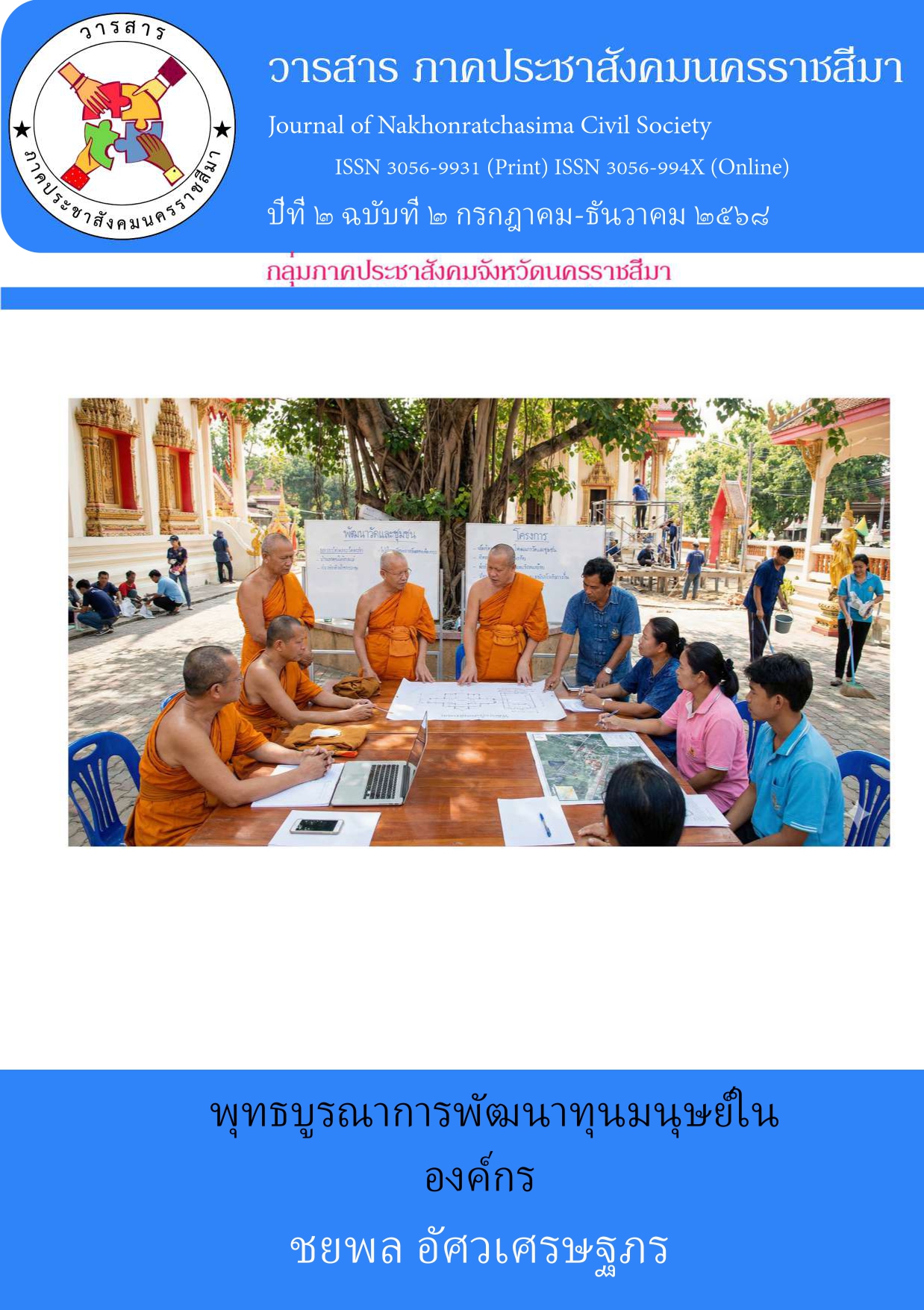
BUDDHIST INTEGRATION FOR HUMAN CAPITAL DEVELOPMENT IN ORGANIZATIONS
Keywords:
Buddhist integrated, Development of human capital, organizationsAbstract
Applying Buddhist principles to lay the foundation for integrated organizational development aims to create "Buddhist-based human capital" the key Buddhist principles of the Iddhipada 4, which are considered the path to success and the starting point for successfully developing personnel into human capital. The Four Iddhipada consist of Chanda (Satisfaction), This principle involves the contentment or love for the task being performed. The development process begins with managing the balance between workload and personnel satisfaction, thereby allowing individuals the opportunity to discover and develop their potential. Cultivating love for one”s work helps foster new learning, self-discovery, and enables personnel to perform their duties vibrantly. Viriya (Diligence/Perseverance): When personnel feel connected and committed to their tasks, it naturally fosters perseverance, resilience, and continuous, tireless effort. This diligent effort is realized by relying on the satisfaction and pleasure gained from performing the task. Citta (Focused Attention/Steadfast Commitment): This involves focused attention and dedication to assigned responsibilities , characterized by mental and emotional firmness, refusing to give up until the task is complete. This mental firmness helps personnel maintain stable emotions and possess ideals to improve the organization and the quality of their work. Vimamsa (Reasoned Reflection/Insightful Understanding): This is the process of rational reflection , drawing upon experiential capital to analyze and resolve problems comprehensively. It builds a system of comprehensive knowledge for job performance through external learning, accumulated experience, and internal wisdom , helping to prevent errors effectively and in a timely manner. Buddhist integration for human capital development based on the Four Iddhipada thus serves as a foundation for cultivating personnel through love for one”s work, diligent effort, steadfast commitment, and insightful understanding. This results in efficient and effective operations , leading to a sustainable balance of happiness within the organization, both in work and in their personal lives.
References
ทิพวรรณ หล่อสุวรรณ์รัตน์. ทฤษฎีองค์การสมัยใหม่. กรุงเทพมหานคร :แชทโฟร์พริ้นติ้ง, 2547.
นิสดารก์ เวชยานนท์. มิติใหม่ในการบริหารทุนมนุษย์. กรุงเทพมหานคร : กราฟฟิกซิสเต็มส์ จำกัด, 2551.
บุญทัน ดอกไธสง. การจัดการทุนมนุษย์. กรุงเทพมหานคร : พิมพ์ตะวัน, 2551.
พรธิดา วิเชียรปัญญา. การจัดการความรู้พื้นฐานและการประยุกต์ใช้. กรุงเทพมหานคร : ธรรกมลการพิมพ์, 2547.
มหาจุฬาลงกรณราชวิทยาลัย พระไตรปิฎกภาษาไทย ฉบับมหาจุฬาลงกรณราชวิทยาลัย. กรุงเทพมหานคร: โรงพิมพ์มหาจุฬาลงกรณราชวิทยาลัย, 2539.
ศิระ โอภาสพงษ์. ทุนมนุษย์. กรุงเทพมหานคร : เออาร์ บิซิเนส เพรส, 2543.
ศิริวรรณ เสรีรัตน์ และคณะ. ทฤษฎีองค์การ. กรุงเทพมหานคร : ธรรมสาร, 2545.
สำนักงานเลขาธิการสภาการศึกษา. การพัฒนาองค์กรและบุคลากรแนวคิดใหม่ในการพัฒนาทรัพยากรมนุษย์. กรุงเทพมหานคร : 21 เซ็นจูรี่, 2547.
Becker G. S. Human Capital : A Theoretical and Empirical Analysis with Special Reference to Educationm. Chicago : The University of Chicago Press, 1994.
Gregory G. and C. Joseph Picken. Beyond Productivity : How Leading Companies Achieve Superior Performance by Leveraging their Human Capital. New York : American Management Association, 1999.
Roos G. and Roos J. “Measuring your company”s intellectual performance”. Long Range Planning Vol.3, 1997.
Weatherly A. Leslie. “Human Capital-The lllusive Asset Measuring and Managing Human Capital :A Strategic Imperative for HR”. SHRM Research Quatery, 2003.