Integration of Buddhamma in the Moral and Ethical Development of Youth
Article Sidebar
Main Article Content
Abstract
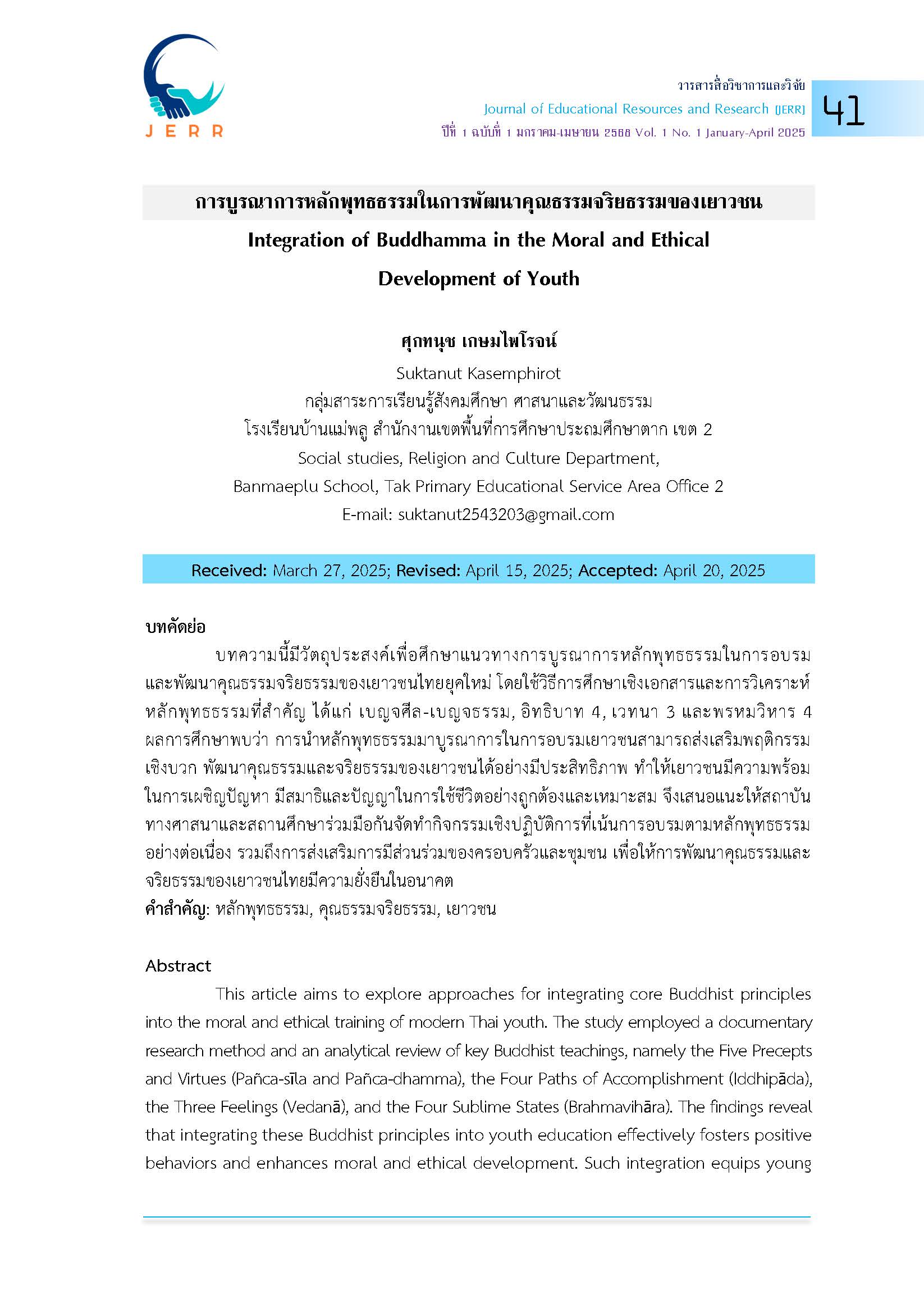
This article aims to explore approaches for integrating core Buddhist principles into the moral and ethical training of modern Thai youth. The study employed a documentary research method and an analytical review of key Buddhist teachings, namely the Five Precepts and Virtues (Pañca-sīla and Pañca-dhamma), the Four Paths of Accomplishment (Iddhipāda), the Three Feelings (Vedanā), and the Four Sublime States (Brahmavihāra). The findings reveal that integrating these Buddhist principles into youth education effectively fosters positive behaviors and enhances moral and ethical development. Such integration equips young individuals with resilience, mindfulness, and wisdom for leading a righteous and balanced life. The study recommends that Buddhist institutions and educational establishments collaborate in organizing continuous, practice-based training programs grounded in Buddhist teachings. Moreover, active participation from families and communities should be encouraged to ensure the sustainable development of morality and ethics among Thai youth.
Article Details

This work is licensed under a Creative Commons Attribution-NonCommercial-NoDerivatives 4.0 International License.
This article is published under a Creative Commons Attribution-NonCommercial-NoDerivatives 4.0 International License (CC BY-NC-ND 4.0), which allows others to share the article with proper attribution to the authors and prohibits commercial use or modification. For any other reuse or republication, permission from the journal and the authors is required.
References
ทิศนา แขมมณี. (2552). ศาสตร์การสอน. พิมพ์ครั้งที่ 9. กรุงเทพฯ: ด่านสุทธาการพิมพ์.
ธานินทร์ ศิลป์จารุ. (2555). การวิจัยและวิเคราะห์ข้อมูลทางสถิติด้วยSPSS และ AMOS. พิมพ์ครั้งที่ 13. กรุงเทพฯ: บิสซิเนสอาร์แอนด์ดี.
นิลุบล เลิศนุวัฒน์ (2564). ความรู้ทั่วไปเกี่ยวกับกฎหมายบริษัทมหาชนจำกัด. โครงการตำราและเอกสารประกอบการสอนคณะนิติศาสตร์. มหาวิทยาลัยธรรมศาสตร์.
พระเทพดิลก (ระแบบ ฐิตญาโณ). (2534). อธิบายหลักธรรมตามหมวดจากนวโกวาท. กรุงเทพฯ: ธรรมสภา.
พระธรรมปิฎก (ประยุทธ์ ปยุตฺโต). (2543). ธรรมนูญชีวิต: พุทธจริยธรรมเพื่อชีวิตที่ดีงาม. พิมพ์ครั้งที่ 6.กรุงเทพฯ: มูลนิธิพุทธธรรม.
ภัทรพล หมดมลทิน. (2559). การพัฒนาเยาวชนตามแนวทางพระพุทธศาสนา. วารสารพุทธจิตวิทยา, 1(1), 13–22.
มั่นเกียรติ โกศลนิรัติวงษ์. (2541). พุทธธรรม: ทฤษฎีและเทคนิคการให้คำปรึกษา. กรุงเทพฯ: สุวีริยาสาส์น.
สวนดุสิตโพลล์. (2555). “เด็ก” ปัจจัยสำคัญในการแก้ไขปัญหาทุจริตที่ยั่งยืน. [ออนไลน์]. แหล่งที่มา: https://dusitpoll.dusit.ac.th/suandusit-poll/. [25 มีนาคม 2568].
สำนักงานเลขาธิการสภาการศึกษาแห่งชาติ. (2553). พระราชบัญญัติการศึกษาแห่งชาติ พ.ศ. 2552 และที่แก้ไขเพิ่มเติม (ฉบับที่ 3) พ.ศ. 2553. กรุงเทพฯ: สำนักงานเลขาธิการสภาการศึกษาแห่งชาติ.
สำนักงานพัฒนาธุรกรรมทางอิเล็กทรอนิกส์ (ETDA). (2567). การสำรวจพฤติกรรมผู้ใช้อินเทอร์เน็ตในประเทศไทย Thailand Internet User Behavior 2565. [ออนไลน์]. แหล่งที่มา: https://www.etda.or.th/th/บรการของเรา/สถตและขอมล/สถตและขอมล/Thailand-Internet-User-Behavior/การสำรวจพฤตกรรมผใชอนเทอรเนตในประเทศไทย-Thailand-Internet-User-Behavior.aspx [25 มีนาคม 2568].
สุทัศน์พงษ์ กุลบุตร. (2550). การปลูกฝังคุณธรรม จริยธรรมให้แก่นักศึกษา. ปทุมธานี: ศูนย์ศิลปวัฒนธรรม ปทุมธานี มหาวิทยาลัยศรีปทุม.
