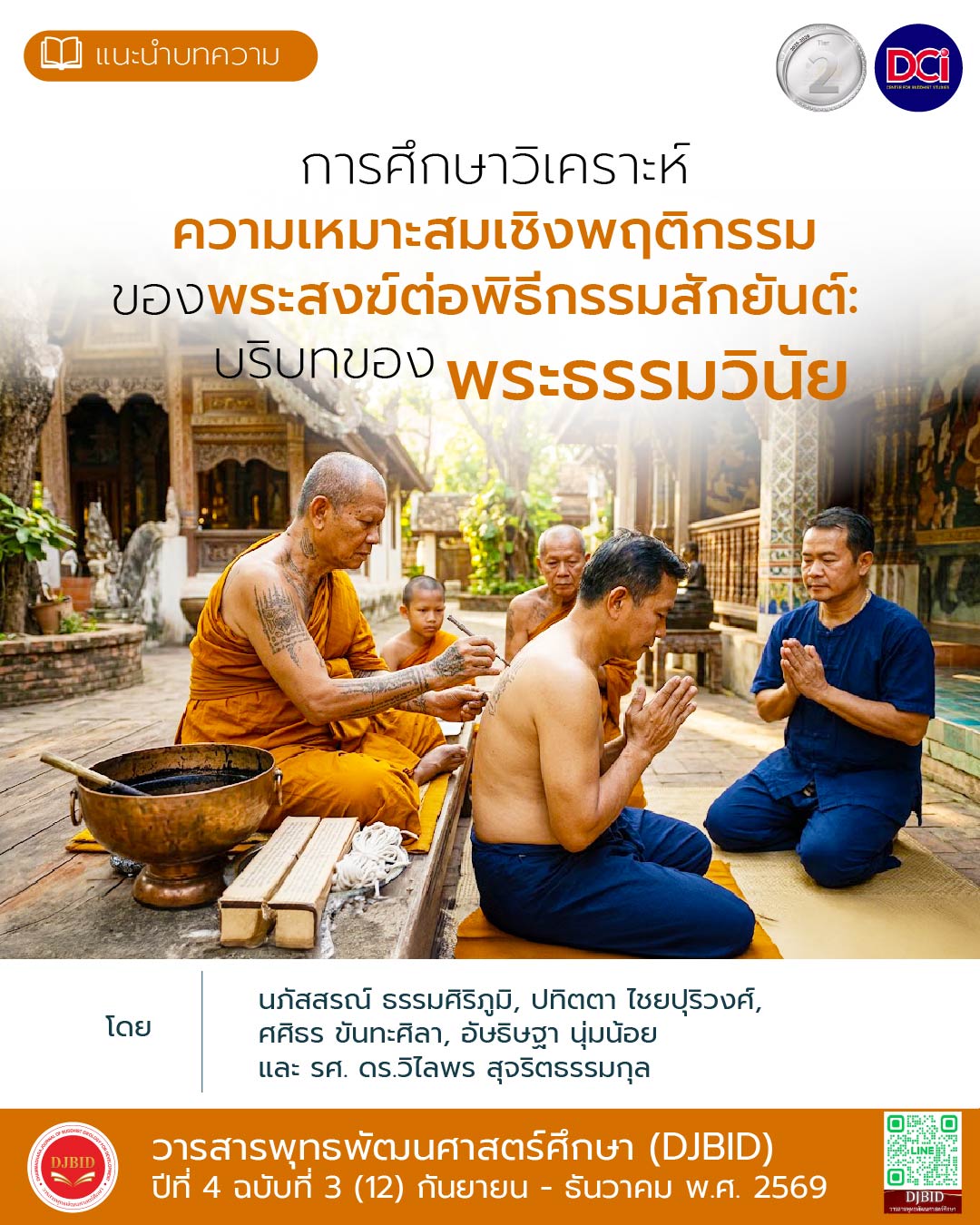
An Analytical Study of the Behavioral Appropriateness of Buddhist Monks Toward Sak Yant Rituals: the Context of Dhamma-Vinaya
Keywords:
Sak Yant, Rituals, Buddhist Monks, Dhamma-VinayaAbstract
This research aims to (1) examine the social context of Sak Yant (sacred tattooing) rituals in Thai temples, and (2) study the Dhamma-Vinaya (Buddhist doctrine and monastic discipline) relevant to these rituals and analyze the appropriateness of Buddhist monks’ involvement in Sak Yant rituals within the framework of the Dhamma-Vinaya.
This research employs a qualitative research methodology, utilizing textual research methods and qualitative content analysis and interpretation. Data from the Tipitaka (Pali Canon) and related academic literature were analyzed to systematically interpret these practices within the Dhamma-Vinaya framework.
The findings reveal that (1) Sak Yant rituals performed by monks are rooted in syncretic beliefs and cultural traditions rather than deriving directly from the Dhamma-Vinaya. (2) When analyzed according to the 20 Principles of Monastic Rule-Making, most aspects of the practice were found to contradict or be inconsistent with nearly every category of these principles. Furthermore, the practice falls under the category of “Tiracchana-vijja” (low arts/worldly crafts prohibited for monks) according to the Three Levels of Precepts (Sila), particularly with regard to the Maha-sila (Great Precepts), which renders it an inappropriate behavior for monastic decorum (Samana-sarupa) and inconsistent with the principle of sense-restraint (Indriya-samvara). Regarding the issue of performing Sak Yant on women, it was found that if a monk practices with a composed mind and limits contact to what is strictly necessary, such an act does not constitute a disciplinary offense (Apatti). However, if underlying sexual intent is present, it constitutes the grave offense of Sanghadisesa; whereas in cases lacking such intent but performed in a private setting, it constitutes a minor offense. Although Sak Yant is often explained as a skillful means (Upaya-kusala), in practice it tends to encourage people to rely on external tools while neglecting genuine mental cultivation aimed at eliminating defilements. This is further linked to the phenomenon of religious commercialization (Buddha-phanit), which may destabilize Buddhism in the long term. Nevertheless, if such rituals are intended as a symbol of upholding the precepts or of becoming a formal adherent of Buddhism—comparable to the Zen tea ceremony or the Mahayana practice of incense branding—they may be considered a genuine form of skillful means. Given that Sak Yant rituals have a broad impact on the public image of the monastic community, the Sangha administration should carefully deliberate on the monks’ role in this practice within the framework of the Dhamma-Vinaya, alongside consideration of the contemporary social context, in order to preserve appropriate and well-founded religious faith going forward.
References
มหาจุฬาลงกรณราชวิทยาลัย. พระไตรปิฎกภาษาไทย ฉบับมหาจุฬาลงกรณราชวิทยาลัย เล่มที่ 1, 2, 9, 10, 20. กรุงเทพฯ: มหาจุฬาลงกรณราชวิทยาลัย, 2539.
กฤษฎา พรหมเวค และปรัชญา ชุ่มนาเสียว. “การสักยันต์ในฐานะซอฟต์พาวเวอร์ของไทย”. วารสารรามคำแหง ฉบับมนุษยศาสตร์. ปีที่ 43 ฉบับที่ 1 (2567). 175–194.
ชนัตถ์ วัฒนา และศรีสกุล ชัยเวียง. “ศึกษาวิเคราะห์บริบททางพุทธศาสนาผ่านพิธีกรรมการสักยันต์”. วารสารปรัชญาอาศรม. ปีที่ 5 ฉบับที่ 2 (2566). 48–62.
ชนัตถ์ วัฒนา และศรีสกุล ชัยเวียง. “แรงศรัทธา ศิลปะ และพุทธพาณิชย์: การวิเคราะห์เชิงวัฒนธรรมผ่านปรากฏการณ์สักยันต์”. วารสารปรัชญาอาศรม. ปีที่ 7 ฉบับที่ 1 (2568). 37–48.
แดนนี บูลล์ และทศพล ชัยสัมฤทธิ์ผล. สักยันต์: ศิลปะ ศรัทธาและความเชื่อผ่านมุมมองเจ้าสำนักในวัดบางพระ. ออนไลน์. https://www.bbc.com/thai/articles/c4njy64l4kno. [7 กุมภาพันธ์ 2569].
พระครูกิตติวรานุวัตร และคณะ. “บทบาทพระสงฆ์ในการสืบสานวัฒนธรรมไทย”. วารสารมหาจุฬานาครทรรศน์. ปีที่ 5 ฉบับที่ 3 (2561). 468–487.
พระครูใบฎีกาหัสดี กิตตินนฺโท. “ความเชื่อของชาวพุทธในสังคมไทย”. สารนิพนธ์พุทธศาสตรบัณฑิต. คณะพุทธศาสตร์: มหาวิทยาลัยมหาจุฬาลงกรณราชวิทยาลัย วิทยาเขตนครราชสีมา, 2563.
พระมหานพพล ธมฺมธโร (ศรีวิเชียร). “ความเชื่อเรื่องการสักยันต์ของผู้มาสักยันต์วัดบางพระ จังหวัดนครปฐม”. วิทยานิพนธ์พุทธศาสตรมหาบัณฑิต สาขาวิชาพระพุทธศาสนา. คณะพุทธศาสตร์: มหาวิทยาลัยมหาจุฬาลงกรณราชวิทยาลัย, 2557.
พระมหาทนงศักดิ์ ธีรสกฺโก (ตาดี). “หลักสัมมาอาชีวะในพุทธปรัชญาเถรวาท”. วารสารวิชาการวิทยาลัยบริหารศาสตร์. ปีที่ 4 ฉบับที่ 2 (2564). 84–94.
พระมหาวัชรากร กิตฺติปญฺโญ. “พัฒนาการของการสักยันต์ไทย: จากพิธีกรรมศักดิ์สิทธิ์สู่ศิลปะบนเรือนร่าง”. วารสารภาษาและวัฒนธรรมศึกษา. ปีที่ 2 ฉบับที่ 1 (2566). 12–24.
พระพิษณุพล สุวณฺณรูโป และคณะ. “ความเชื่อเรื่องยันต์ในล้านนาจากมุมมองพระพุทธศาสนา”. วารสารมหาจุฬานาครทรรศน์. ปีที่ 6 ฉบับที่ 4 (2562). 1999–2022.
พระอธิการอาทิตย์ อาทโร และพระมหาวิโรจน์ คุตฺตวีโร. “กุศโลบายในการสอนธรรมจากการสักยันต์ในสังคมไทย”. วารสาร มจร บาฬีศึกษาพุทธโฆสปริทรรศน์. ปีที่ 9 ฉบับที่ 1 (2566). 13–22.
พูนทรัพย์ โพธิ์พันธุ์. “การศึกษาเรื่องการสักของคนไทยสมัยอยุธยาถึงสมัยรัชกาลที่ 5 (พ.ศ. 1893–2453)”. สารนิพนธ์การศึกษามหาบัณฑิต สาขาวิชาประวัติศาสตร์. คณะสังคมศาสตร์: มหาวิทยาลัยศรีนครินทรวิโรฒ, 2549.
รอบทิศ ไวยสุศรี. “วิธีปฏิรูปการสร้างพระเครื่องเพื่อให้เป็นกุศโลบายในการปฏิบัติธรรม: กรณีศึกษา การสร้างพระเครื่องของพระอาจารย์วรงคต วิริยธโร วัดพุทธพรหมปัญโญ จังหวัดเชียงใหม่”. รายงานการวิจัย. ศูนย์พุทธศาสน์ศึกษา: จุฬาลงกรณ์มหาวิทยาลัย, 2562.
สุธิดา แซ่อึ้ง. “การสื่อสารความหมายรอยสักของวัยรุ่นไทย”. วิทยานิพนธ์นิเทศศาสตรมหาบัณฑิต สาขาวิชาการนิเทศศาสตร์. คณะนิเทศศาสตร์: มหาวิทยาลัยกรุงเทพ, 2559.
อ้อมใจ วงษ์มณฑา, ประสิทธิ์ รัตนมณี และอารีย์ ธรรมโคร่ง. “การอนุรักษ์ภูมิปัญญาการสักยันต์ด้านพิธีกรรมและความเชื่อ กรณีศึกษาเครือข่ายสำนักสักยันต์อาจารย์พันธ์ พุฒยอด”. วารสารสังคมศาสตร์และวัฒนธรรม. ปีที่ 9 ฉบับที่ 8 (2568). 357–374.
Crosby, K. Theravada Buddhism: Continuity, Diversity, and Identity. Chichester: Wiley-Blackwell, 2014.
McDaniel, Justin Thomas. The Lovelorn Ghost and the Magical Monk: Practicing Buddhism in Modern Thailand. New York: Columbia University Press, 2011.
Swearer, Donald K. The Buddhist World of Southeast Asia. 2nd ed. Albany: SUNY Press, 2010.