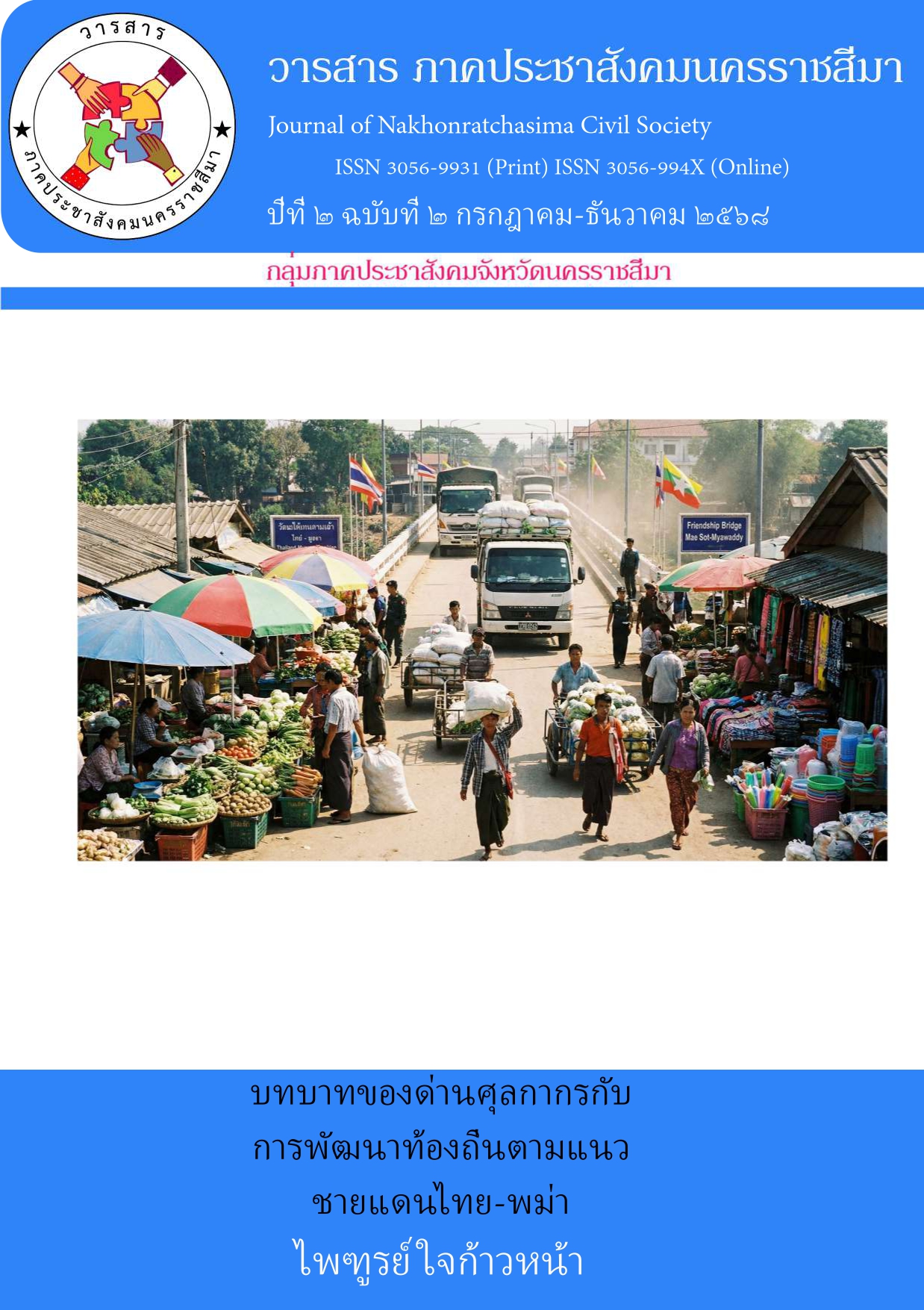
THE ROLE OF CUSTOMS CHECKPOINTS IN LOCAL DEVELOPMENT ALONG THE THAI-BURMESE BORDER
Keywords:
Customs Checkpoints, Local Development, Thai-Burmese BorderAbstract
This academic article focuses on examining the role of customs checkpoints in supporting local development along the Thai-Myanmar border. Cross-border trade has long served as a fundamental economic activity since humans first began to settle and develop productive means for subsistence, leading to the exchange of goods among communities and eventually evolving into national economic systems. The study reveals that, while the exact origins of border trade cannot be clearly identified, it has continuously developed over time, giving rise to customs systems intended to regulate the movement of goods and people across borders. At present, the Thai Customs Department plays a crucial role in ensuring effective border management to facilitate the movement of goods and travelers between Thailand and its neighboring countries, in accordance with various international agreements. These include cross-border transport facilitation, border crossing procedures for individuals, temporary vehicle importation, and the provision of customs-related services.
In addition, the development of the ASEAN Customs Transit System (ACTS), supported by the European Union and the ASEAN Secretariat, plays a significant role in modernizing and harmonizing customs standards across the region. This system forms an essential foundation for promoting sustainable trade. Customs operations must also align with immigration laws and national security policies. The Ministry of Finance’s announcements regarding tariff reductions further reflect a policy shift toward promoting exports rather than merely collecting revenue. These changes have provided border customs checkpoints with an expanded role in enhancing cross-border and international trade, ultimately boosting the economic capacity of local communities along the Thai-Myanmar border and strengthening the national trade system as a whole.
References
ชูเกียรติ นวลศรี. “แนวทางการบริหารกองทุนเศรษฐกิจชุมชนอย่างยั่งยืน: กรณีศึกษา องค์การบริหารส่วนตำบลนาทุ่ง อำเภอเมือง จังหวัดชุมพร.” วิทยานิพนธ์ปริญญามหาบัณฑิต, วิทยาลัยการปกครองท้องถิ่น มหาวิทยาลัยขอนแก่น, 2552.
ทรงยศ สาโรจน์. “การพัฒนารูปแบบการเสริมสร้างเศรษฐกิจชุมชนด้วยทุนทางวัฒนธรรม กรณีศึกษาชุมชนเรือนแพลุ่มน้ำสะแกกรัง.” วิทยานิพนธ์ปริญญาดุษฎีบัณฑิต, สาขาวิชาพัฒนศึกษาบัณฑิตวิทยาลัย มหาวิทยาลัยศิลปากร, 2557.
เทพรักษ์ สุริฝ่าย และ ลำปาง แม่นมาตย์. “บทบาทการค้าชายแดนในการพัฒนาเศรษฐกิจชุมชนกรณีศึกษาจังหวัดหนองคาย.จังหวัดนครพนมและจังหวัดมุกดาหาร.” วารสารการเมืองการปกครอง 8, ฉ. 1 (2561): 153-176.
ธเนศ ศรีวิชัยล าพันธ์. การพัฒนาเศรษฐกิจชุมชน. เชียงใหม่: คณะเศรษฐศาสตร์ มหาวิทยาลัยเชียงใหม่, 2556.
นราพจน์ ทิวถนอม. กฎหมายที่เกี่ยวกับโครงการรูปแหบบเขตเศรษฐกิจพิเศษกับการพัฒนาอุตสาหกรรมของประเทศ. กรุงเทพฯ: วิทยาลัยการยุติธรรม, 2551.
ผุสดี พลสารัมย์. ลิศรา เตชะเสริมสุขกูล. และ ปิยะรัตน์ พิพิธวณิชธรรม. การค้าระหว่างประเทศทางบกภาคเหนือ. กรุงเทพฯ: สถาบันระหว่างประเทศเพื่อการค้าและการพัฒนา, 2557
พิมลพรรณ ไชยนันท์และ จักรพันธ์ ขัดชุ่มแสง. โครงการพัฒนาเขตเศรษฐกิจพิเศษกับการเปลี่ยนแปลง ในพื้นที่ชายแดน: บทส ารวจเบื้องต้นในบริบทพื้นที่ตากและเชียงราย. วารสารสังคมวิทยา มานุษยวิทยา 36, ฉ. 1 (2560): 104-127.
มธุรดา สมัยกุล. “การพัฒนาเศรษฐกิจการค้าชายแดน กรณีศึกษาตลาดมิตรภาพชายแดนไทยกัมพูชา.” วารสารวิทยบริการ 25, ฉ. 1 (2557): 22-30. อนุรักษ์ ตั้งปณิธานนท์. “แนวทางการขับเคลื่อนการบริหารการพัฒนาพื้นที่เขตเศรษฐกิจพิเศษ มุกดาหาร.” วารสารวิทยาการจัดการ มหาวิทยาลัยราชภัฏนครปฐม 7, ฉ. 2 (กรกฎาคมธันวาคม 2563): 14-24.
วสันต์ ปัญญาแก้ว. “เขตพัฒนาเศรษฐกิจพิเศษชายแดนกับการเคลื่อนย้ายของผู้คน.” วารสารสังคม วิทยามานุษยวิทยา 36, ฉ. 1 (มกราคม - มิถุนายน 2560): 2-8.